

Do you find it hard to make friends

Why Do Some People Find It Harder to Make Friends?

If making friends has always felt harder for you than it seems to for other people, you are not alone – and it’s rarely down to any single cause. In my work as a counsellor, this is something clients bring up often, usually with a good deal of self-blame attached. So I want to unpack what’s actually going on, because understanding the *why* can take a lot of that shame out of the picture.

Early experiences shape our starting point

The way we were cared for as children has a lasting effect on how easily we connect with others as adults. Children who grow up with consistent, responsive caregiving tend to develop what psychologists call secure attachment. That security becomes a kind of template – it makes it easier later in life to trust people, read social cues accurately, and tolerate the small vulnerabilities that friendship inevitably asks of us.

People whose early relationships were inconsistent, neglectful, or unpredictable often develop different patterns instead – perhaps pulling away from closeness, or feeling anxious about being rejected. These patterns can make new friendships genuinely harder to build and sustain, even when the desire for connection is just as strong.

Social skills are learned, not innate

For most of us, the skills involved in making friends are not something we are simply born with – they are built through practice. Reading tone of voice and body language, knowing how to open a conversation, sensing when someone wants to keep talking or wrap things up, gently recovering from an awkward moment – all of this is learned through repetition.

If you had fewer opportunities to practise – because of a difficult home life, frequent moves, social anxiety that kept you more isolated, or a neurodivergent way of processing social cues – it makes sense that friend-making would feel harder. That is not a reflection of how much you care about people; it is simply a matter of fewer reps and therefore less practise.

Mental health plays a significant role

Conditions like social anxiety, depression, and low self-esteem interfere directly with the very behaviours friendship depends on: reaching out first, sitting with a bit of awkwardness, believing you are worth someone’s time and attention. Depression in particular can create a difficult loop – withdrawing from others leads to fewer connections, which then deepens the low mood, making the next step outward feel even harder.

Personality and temperament matter too – but they are more neutral than they seem

It is worth saying clearly: introverts are not less capable of friendship. Many simply need fewer, deeper connections rather than a wide circle, and they often recharge through solitude rather than socialising. The trouble is that our culture tends to reward constant initiating and large social networks, so introverts can get unfairly read as “bad at” friendship when really they are just built differently.

Circumstances create – or remove – the opportunity

Friendship depends heavily on something researchers call repeated, low-stakes contact over time – simply crossing paths with the same people again and again in a relaxed setting. School does this for us automatically. Adulthood often does not. Working from home, moving cities, or taking on caregiving responsibilities can all quietly remove the structures that used to manufacture connection for us – and when that happens, even someone with strong social skills can struggle, purely because the opportunity is not there anymore.

How we see ourselves can become self-fulfilling

Finally, our own beliefs about our social ability shape our behaviour. If you have come to believe you are “just bad” at making friends, you may approach new people more guardedly, or give up sooner than you would otherwise – which can then reinforce the very belief you started with.

Where this leaves us

If any of this resonates, it is worth remembering that difficulty with friendship is almost never one single thing – it is usually some combination of early relational patterns, practised skill, mental health, temperament, and current circumstances. None of that means you are broken or destined to struggle forever. These patterns were learned, which means new ones can be learned too, often with the right support.

If you would like to explore what is been getting in the way of connection for you, I will be happy to help. Feel free to get in touch to arrange a session.


Caroline Ellison Accredited BACP Counsellor & Psychotherapist www.carolineellisoncounselling.co.uk Fleet, Hampshire | 07818 798597

This blog was collated from internet sources for information by a counsellor in Fleet, Hampshire – Caroline at Caroline Ellison Counselling – this is my experience and these are my opinions. Carpe Diem.
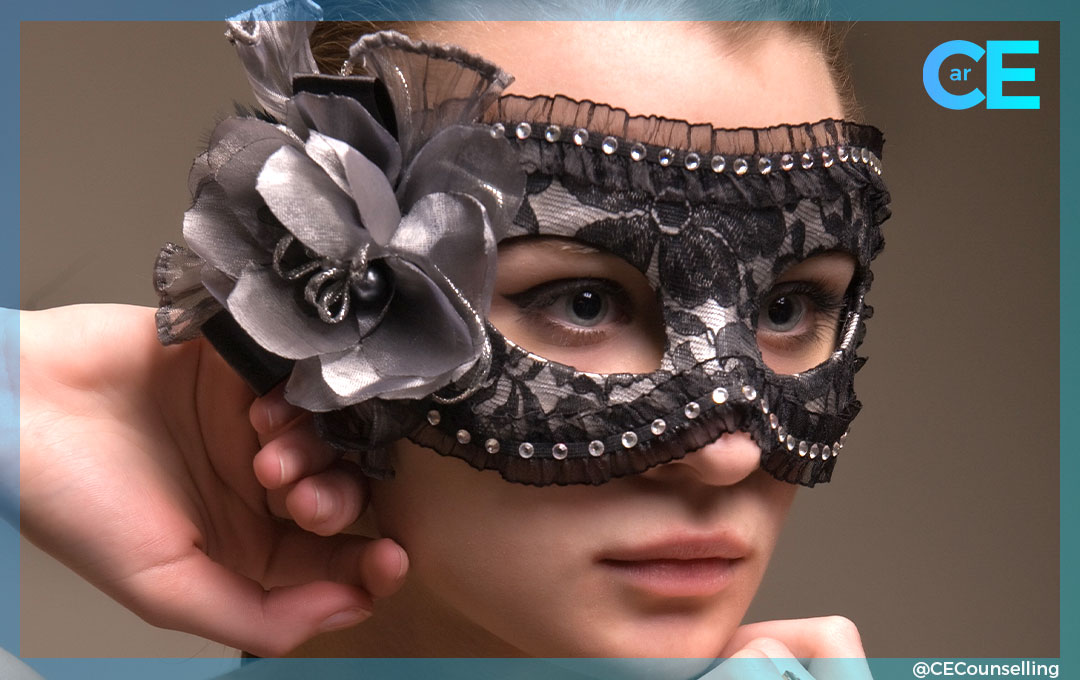
How to unmask and discover who you really are

How to Unmask and Discover you really are

Unmasking and discovering who you really are is a deeply personal and transformative journey. It involves peeling away layers of societal expectations, inherited beliefs and fears to reveal your authentic self.

Here are a few steps to help discover and understand the layers to peel them away:

  1. Self-Reflection

    • Ask yourself deep questions: Take time to reflect on who you truly are, outside of external influences. What are your values, passions and desires? What do you love doing when no one is watching?
      • Suggested questions:
        • What happened today that bought me joy?
        • What happened today that made me anxious?
        • What jobs/tasks did I enjoy?
        • What jobs/tasks frustrated me?
    • Keep a journal: Write down your thoughts and feelings regularly. This can help you understand your true nature over time.
    • Identify your masks: Notice how you behave in different situations. Are you pretending to be someone you’re not to fit in or avoid conflict?
  1. Let Go of External Expectations

    • Release the need to please others: Often, we wear masks to conform to what others expect of us, whether it’s our family, society, or friends. Start letting go of the idea that you need to meet everyone else’s expectations to be happy.
    • Embrace your individuality: Understand that it’s okay to be different. Be proud of who you are and discover that your unique qualities are what make you special.
  1. Confront Your Fears

      • Face your insecurities: Fear often causes us to hide parts of ourselves. Identify the fears that make you put on a mask. Perhaps it is fear of rejection, failure, or judgment? Confronting and overcoming these fears can help you discover your authentic self.
      • Step out of your comfort zone: Don’t let your comfort zone become your cage. Take small risks by expressing yourself in ways that feel vulnerable but true. This could be through sharing your real thoughts, trying new things, or speaking up for what you believe in. When you do this notice how you feel.
  1. Cultivate Self-Compassion

    • Accept yourself fully: Self-acceptance is crucial in the journey of unmasking. Understand that you are human and it is okay to have flaws and imperfections. Treat yourself with kindness, compassion and patience.
    • Forgive yourself: We all make mistakes. Forgiving yourself for past choices can help you move forward with a clearer sense of who you are.
  1. Connect with Like-Minded People

    • Surround yourself with authenticity: Being around people who are unapologetically themselves can inspire you to do the same. Healthy relationships are built on honesty and mutual respect and these people will encourage your authentic self.
    • Seek mentors or guides: Sometimes, someone who has already gone through their own self-discovery journey can help guide and support you in your own.
  1. Practice Mindfulness and Meditation

    • Cultivate awareness: Mindfulness helps you stay present and aware of your thoughts, feelings and actions. Through mindfulness, you can recognize when you’re slipping into old patterns of behaviour or wearing a mask. Get to know yourself better.
    • Meditate for clarity: Regular meditation can help quiet the mind and let you tap into a deeper sense of self-awareness. Find what works for you to connect with your true inner self.
    1. Follow Your Passions

    • Do what brings you joy: When you’re engaged in activities that make you feel alive, you’re tapping into your true self. Pay attention to what excites and motivates you and follow those interests with an open heart.
    • Take time for creative expression: Creativity is a great way to express your true self, whether through art, writing, music, or even just daydreaming. It allows you to break free from limitations and connect with your innermost desires.
  1. Seek Professional Guidance

    • Therapy or coaching: Sometimes, the support of a therapist or life coach can help you uncover who you really are, especially if past trauma or conditioning has obscured your self-awareness.
    1. Embrace Change and Growth

    • Allow yourself to evolve: Remember that self-discovery is an ongoing process. The person you are today may not be the person you are tomorrow. Embrace growth and do not be afraid to change as you uncover more about yourself. It will be liberating.
  1. Trust Yourself

    • Listen to your intuition: Your inner voice is a guide to who you really are. Trusting your gut feelings can lead you to make choices that are aligned with your authentic self.

Remember, the journey to uncover who you truly are is not a linear path, it is a path unique to you. It is likely to be full of exploration, twists and moments of self-doubt. But every step you take brings you closer to embracing the person you were always meant to be. Enjoy the journey, it is worth and so are you.

For individual counselling I am here for you. Contact me to book an initial session and I will support you.

If you are in crisis and want immediate support please call the Samaritans who offer a free 24 hour helpline – Phone: 116 123 – Website: www.samaritans.org

Created by your local counsellor in Fleet, Caroline at Caroline Ellison Counselling – this is my experience and these are my opinions . Carpe Diem.