
Healing After an Affair

Healing After an Affair: Gottman’s “Atone, Attune, Attach” Model

Discovering that your partner has been unfaithful – or realising the damage your own choices have caused – can feel like the ground has disappeared beneath you. Many couples I work with arrive in this place utterly overwhelmed, unsure whether their relationship can survive and feel lost with what to do next to move forwards.

If both in the couple want to find a way to recovery, recovery is possible. It is not quick, and it is not easy, but many couples do come through an affair with a relationship that is more honest and more connected than it was before.

One of the most helpful frameworks I draw on in couples work is Dr John Gottman’s model for rebuilding trust after betrayal, often described as three phases:

**Atone, Attune, and Attach**

Gottman’s research has followed couples who successfully recovered from infidelity, and it found that healing tends to move through these three overlapping stages. I want to share a little about what each one involves, because understanding the shape of the road ahead can make it feel a little less frightening to walk.

It is rarely a straight line

Before I go into the three phases, it is important to say each couple will move through Atone, Attune and Attach in accordance to their relationship and its patterns. We are all unique and will approach this pathway to recovery in our own way. For example, you might feel steady one week and be back in raw pain the next. This is not a failure or a sign you not are doing it right – it is simply how healing from betrayal often goes. Most couples I see move backwards and forwards between these stages many times before they find solid ground again.  Trust the process.

Phase One: Atone

This is usually the hardest phase, and it is where the work of rebuilding safety begins. The partner who was unfaithful needs to take full responsibility for what happened:

      • without defensiveness
      • without minimising
      • without shifting any blame onto their partner.

This often means ending all contact with the affair partner, answering difficult questions honestly, and offering transparency in a way that helps rebuild a sense of safety, for as long as it’s needed.

Meanwhile, the hurt partner needs space to feel and express their pain

      • the shock
      • the grief
      • the anger – without being rushed through it.

It is very common for the same questions to come up again and again in this phase. That is not a setback; it is simply part of how the mind processes something so destabilising.

Atonement lays the foundation. Without genuine accountability here, it is very difficult for the next two phases to take root.

Phase Two: Attune

Once a degree of safety has been re-established, the focus shifts towards emotional connection. Attunement is about genuinely wanting to understand your partner’s inner world – their fears, their needs, their experience – even when what they share is painful to hear.

In sessions, I often encourage couples to build small, regular habits of checking in with one another: a few honest minutes each day where you share how you are really feeling, using “I” statements –

“I feel…” rather than “you always…”

Listening to understand, rather than to respond, is a skill and like any skill, it strengthens with practice. This is also where couples often start creating new, positive shared experiences that are not overshadowed by the affair.

Phase Three: Attach

The final phase is about rebuilding closeness – emotionally and physically – and forming a renewed sense of “us.” This includes restoring physical intimacy, but only at a pace that feels genuinely safe for both partners, with open conversation about needs and boundaries along the way.

It is common for intrusive thoughts or old fears to resurface during intimate moments, even once a couple feels they have made real progress. This is a normal part of healing, not a sign that something is wrong. Couples in this phase often find it helpful to create small new rituals together – a weekly date night, a nightly check-in – that help build fresh memories and a renewed sense of partnership.

A gentle reminder

There is no fixed timetable for this work. Meaningful healing after betrayal often takes a year or more, and that is completely normal. What matters far more than speed is consistency – small, honest steps taken again and again, on both sides.

If you and your partner are trying to find your way back to each other after an affair, please know that you do not have to do this alone. Couples counselling can offer a safe, structured space to work through each of these phases at a pace that feels right for you both. If this is something you are facing, I will be glad to talk with you about how I can support you. You can get in touch via the contact page to arrange a first session. Taking that first step is brave, and you don’t have to do it alone.


Caroline Ellison Accredited BACP Counsellor & Psychotherapist www.carolineellisoncounselling.co.uk Fleet, Hampshire | 07818 798597

This blog was collated from internet sources for information by a counsellor in Fleet, Hampshire – Caroline at Caroline Ellison Counselling – this is my experience and these are my opinions. Carpe Diem.
Grief 3 months after a Traumatic Death

Grief 3 months after a Traumatic Death

Three months after a traumatic death, grief can be particularly intense and prolonged, potentially leading to complicated grief or prolonged grief disorder. Symptoms like intense sorrow, difficulty accepting the death, and difficulty enjoying life may persist or worsen, requiring support and professional intervention if they don’t improve.

  • Complicated Grief:

This occurs when grief symptoms persist or worsen beyond the initial stages, hindering the healing process. It can manifest as intense pain, difficulty accepting the loss, and a persistent focus on the deceased.

  • Prolonged Grief Disorder:

This is a formal diagnosis characterized by persistent and intense grief symptoms that interfere with daily life, including difficulty accepting the death, marked sense of disbelief, and avoidance of reminders of the deceased.

  • Signs and Symptoms:

Beyond intense sorrow, individuals experiencing trauma-related grief may also experience:

    • Difficulty accepting the death
    • Persistent longing for the deceased
    • Numbness or detachment
    • Bitterness or anger
    • Feeling life holds no meaning
    • Lack of trust in others
    • Inability to enjoy life
    • Physical symptoms like fatigue, changes in sleep or appetite
  • Factors Influencing Grief:

Traumatic deaths, like those involving violence or sudden accidents, can intensify grief, making it more challenging to cope. Additionally, factors like social support, cultural background, and pre-existing mental health conditions can also impact the grieving process.

  • Seeking Support:

It’s crucial to seek professional help if grief symptoms persist or worsen, or if they interfere with daily life. Therapists can provide support and guidance in navigating the grieving process, including techniques for managing intense emotions and developing coping strategies.

I am a Specialist Bereavement and Grief Counsellor in Fleet, Hampshire working in person and online counselling and offer a safe, supportive space for clients experiencing grief and loss through bereavement.

Contact me to book an initial session and I will support you through this difficult time.

For additional links please visit this page https://www.carolineellisoncounselling.co.uk/grief-counsellor/ to find a comprehensive list of charities who may be able to support you.

Collated by your local counsellor in Fleet, Caroline at Caroline Ellison Counselling.

Grief Poetry – Requiem Sonnet 1

Requiem Sonnet 1

They say it will subside, but this I know,
it does not go away; sporadic grief
which strikes unbidden, (and brings no relief),
lingers, unfathomably deep, to grow
from minor stimuli. I wake in tears,
searching my psyche, seeking to retain
its dream filled narrative – my cherished Jane –
her love unchallenged by dementia years.
And thus, it goes – the funeral, the wake
and legal stuff afforded me some closure.
But empty days, an empty house conspire
with well-meant kindly sympathy to break
my bubble of sang froid; of my composure –
sobs smother still my raw grief’s smouldering fire.

 Mr JH Burman ~ September 2024

Note about the Author

This poem was written by my Dad, 3 months after losing his wife, my Mum. He is coping as well as he can with the loss of his soul mate, love of his life, his wife. It is hard to know what he is going through as only he can truly know this, but his poetry has a beautiful way of helping us understand his experience. Thank you Dad for letting me share this with others. I love you.

Grief and Bereavement Counselling

If you are living with grief and want some support please do get in touch. If you are experiencing grief and loss due to bereavement, you are not alone, there are many people who are here to support you. There are helplines and support groups who will offer support, click on the link below to find some of those who can offer expert advice.   https://www.carolineellisoncounselling.co.uk/grief-counsellor/

Mum 1943-2024

Mum – 1943 – 2024

I write this one week after Mum’s passing. She died on Sunday, 9th June 2024

Mum has now gone after her long and arduous battle with Dementia which we all knew she would never win. She died peacefully with Dad, myself and one of my brothers by her side. It was a peaceful end to a prolonged illness. Whilst we were all prepared for this having had months if not years of living grief, her final passing was a devastating sadness. Dad confirmed she was gone and I left the room and sat on the lawn of my childhood home and quietly sobbed my tears of grief. Mummy is dead! Life around us continuing on in normality whilst for me, my assumptive world is altered forever.

I was surprised at how hard I found her final moments as Mum has been poorly for so long. In the week since her death, I have felt discombobulated, I have been struggling to form sentences and I feel like there are rocks in my head. I need to battern down the hatches for a while whilst the grief runs its course through my heart and soul.

This is not my first loss but this has had the most profound  impact. It is the loss of my Mum. Mum inspired me during her life and in many ways I am the person and counsellor today because of her. Her influence, nature and character moulded me in different ways. In her passing Mum has one last lesson to give and that is that grief is a process unique to each one of us. However you grieve and however you feel is OK as we all manage things in our own special way. Thank you Mum for your parting gift of knowledge. I will miss you.

If you are seeking Alzheimers and Dementia Counselling please get in touch with Caroline Contact who is has years of experience working with carers and those affected by Alzheimer’s and Dementia.

This blog was collated from internet sources for information. Please talk to your GP for more information. 

Written by your local counsellor in Fleet, Caroline at Caroline Ellison Counselling – this is my experience and these are my opinions. Carpe Diem.
Dementia Action Week

Dementia Action Week 16th – 22nd May 2022

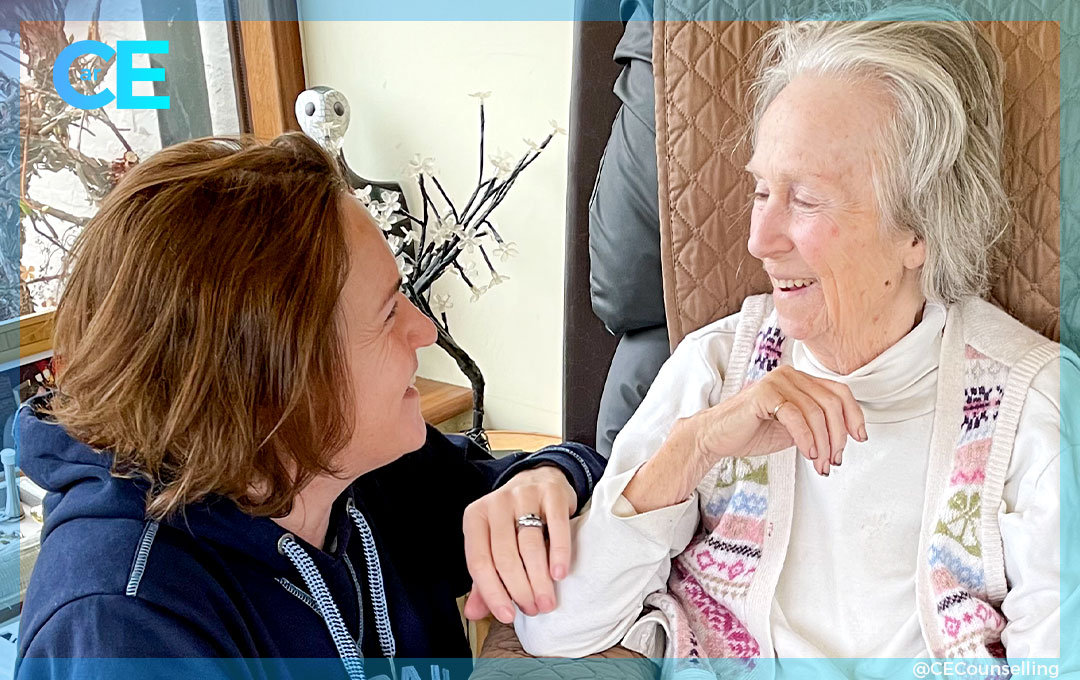
My Mum’s journey with Dementia continues and each day that passes feels like a blessing and a worry all at the same time. Mum has stopped trying to eat and my Dad and her carers are daily finding new ways to get enough nutrition into her. From shakes made from protein rich beans, fruit and milk to trifle, they are trying it all. Continue reading “Dementia Action Week”

Tug of war with Dementia – Living Grief

The tug of war with dementia

The grey hair sprouts
The bottom lip pouts
Sadness lingers
I’m typing with my fingers
To get this feeling out!
~ Caroline Ellison (not a poet!)

Sadness Creeping in

The tug of war with dementia is cruel, profound, deeply moving and today has been tough! Continue reading “Tug of war with Dementia – Living Grief”

Christmas and Dementia

Christmas and Dementia

Together Christmas and Dementia do not make good bed fellows. Every Christmas Mum who is living with Dementia is less aware of what is going on. For Mum and Dad, Christmas Day is now very much just another day of the week. They are alone together, Mum unaware of what day it is and Dad filled with nostalgia and sadness Continue reading “Christmas and Dementia”

Mother’s Day without Mum

Mother’s Day without Mum!

My Mum has gone in mind but is still with us in body and soul! Today I called my Dad to say

“Happy Mother’s Day”

It left me feeling empty when I put the phone down and I came to my cabin to write this whilst it was still clear in my head and heavy in my heart. Continue reading “Mother’s Day without Mum”

Living with Grief

Living with Grief

My Mum is in late stages of Vascular Dementia and this weekend talking with family it dawned on me that this year will be the first year I will not spend Christmas with my Mum! It hit me without warning and a deep sadness engulfed all of me. I stopped what I was doing and simply froze to the spot and felt the grief throughout my heart and soul. Continue reading “Living with Grief”